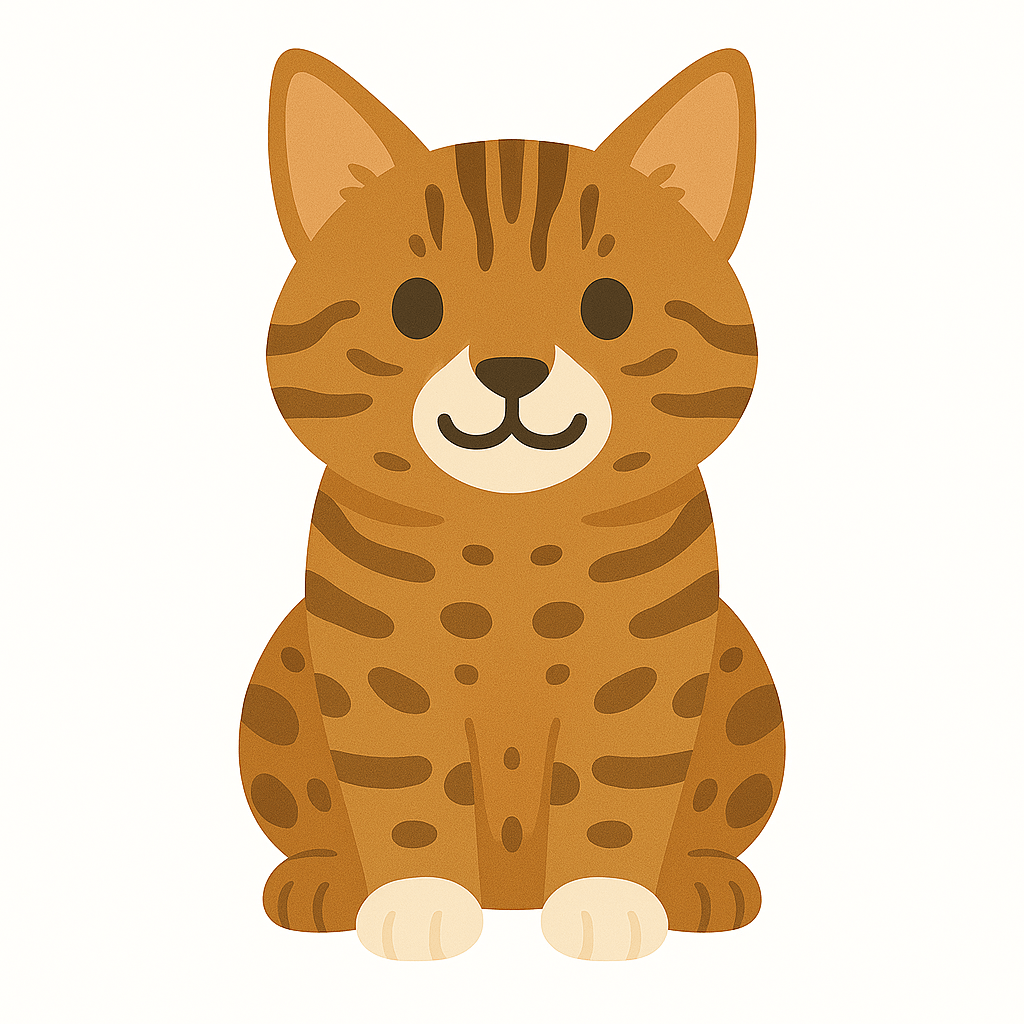
Bengal
The Bengal cat is a distinctive hybrid breed created by crossing domestic cats with Asian Leopard Cats. Known for their wild appearance with leopard-like spots or marbled patterns, they combine the exotic beauty of their wild ancestry with the temperament of domestic cats. Bengals are highly intelligent, energetic, and uniquely attracted to water.
Temperament
Active, intelligent, and playful with a strong hunting instinct. Curious and adventurous, often described as dog-like in their loyalty and interaction with humans. Can be vocal and demanding of attention. Generally good with children and other pets when properly socialized.
Exercise Needs
Bengal cats are highly energetic and require 45-75 minutes of daily activity. They need both physical exercise and mental stimulation to prevent destructive behaviors. Interactive play sessions and climbing opportunities are essential for their well-being.
Key Tips:
-
Interactive wand toys and laser pointers
-
Cat trees and climbing structures
-
Puzzle feeders and treat dispensers
-
Water play activities
-
Supervised outdoor exploration
-
Rotating toy selection
-
Daily hunting-style play sessions
Grooming Requirements
Bengal cats have low to moderate grooming needs due to their short, dense coat. Weekly brushing helps reduce shedding and maintains coat health. They often enjoy water and may even join their owners in the shower, making baths easier when needed.
Key Tips:
-
Weekly brushing with rubber brush or glove
-
Regular nail trimming every 2-3 weeks
-
Ear cleaning as needed
-
Dental care 2-3 times weekly
-
Occasional baths (they may enjoy water)
-
Check and clean eyes regularly
Nutrition
Bengal cats require high-quality, protein-rich diet to support their active lifestyle and muscular build. They may have sensitive stomachs, so gradual diet changes are recommended. Some Bengals may have food allergies, particularly to grains. Fresh water should always be available.
Key Tips:
-
High-quality, grain-free cat food
-
Protein-rich diet (chicken, fish, turkey)
-
Gradual diet transitions
-
Fresh water always available
-
Limited ingredient diets for sensitive cats
-
Avoid foods with artificial additives
-
Monitor for food allergies
Insurance Cost for Bengal
Premiums vary by animal, package and policy terms. Published product prices are reference information; request a current quote. No general market average is provided.
Nutrition Guide
Bengal Nutrition Guide
FEDIAF-based daily calorie and food amount calculators for Bengal. Jump directly to breed-specific feeding scenarios.
Suggested starting weight for this breed: about 5 kg.
Popular calculations for Bengal
- Bengal adult dry food amount
- Bengal kitten feeding amount
- Bengal neutered feeding guide
- Bengal senior feeding guide
Common Health Concerns
Regular preventive care can help detect and manage these conditions early. Schedule annual health screenings with a veterinarian familiar with Bengals.
Hypertrophic Cardiomyopathy (HCM)
CommonHeart muscle disease that can cause sudden death in cats. Bengal cats may have a genetic predisposition to this condition. Regular cardiac screening is essential for breeding cats.
Annual cardiac ultrasound screening, genetic testing available
Pyruvate Kinase Deficiency (PK-Def)
UncommonGenetic blood disorder affecting red blood cell metabolism. Can cause anemia and weakness. A genetic test is available to identify carriers and affected cats.
Genetic testing for breeding cats, regular blood work monitoring
Progressive Retinal Atrophy (PRA)
UncommonInherited eye disease causing gradual vision loss. Can lead to complete blindness. Early detection through eye examinations is important for breeding decisions.
Annual eye examinations by veterinary ophthalmologist
Patellar Luxation
UncommonKneecap dislocation that can cause lameness and pain. More common in active cats like Bengals. Can range from mild to severe requiring surgical correction.
Regular orthopedic examinations, monitor for lameness