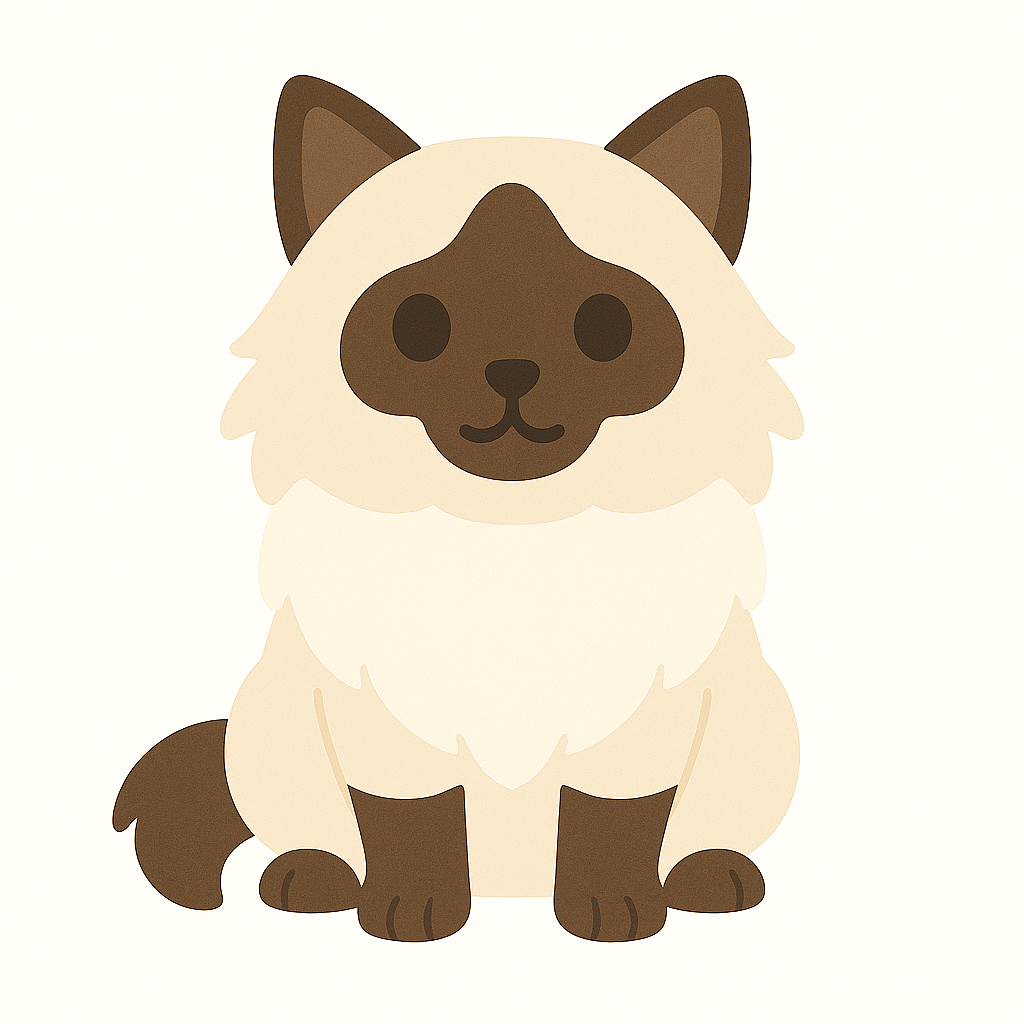
Ragdoll
The Ragdoll is a large, affectionate, and docile cat breed known for its striking blue eyes, silky semi-long fur, and tendency to go limp when picked up.
Temperament
Gentle, affectionate, calm, and sociable. Excellent with children, other pets, and enjoys human companionship.
Exercise Needs
Ragdolls are relatively calm but benefit from interactive play for mental stimulation and physical health.
Key Tips:
-
Interactive wand toys
-
Laser pointer play
-
Short climbing sessions
-
Gentle chase games
Grooming Requirements
Ragdolls have semi-long fur that requires regular brushing to prevent mats. Professional grooming every 6-8 weeks is optional but helps maintain coat health.
Key Tips:
-
Brush 3-4 times per week
-
Check ears weekly
-
Trim nails every 2-3 weeks
-
Optional professional grooming every 6-8 weeks
Nutrition
Balanced diet with high-quality cat food. Monitor weight to prevent obesity, as Ragdolls can gain easily.
Key Tips:
-
High-quality cat food
-
Monitor portions
-
Fresh water always available
-
Avoid overfeeding
Insurance Cost for Ragdoll
Premiums vary by animal, package and policy terms. Published product prices are reference information; request a current quote. No general market average is provided.
Nutrition Guide
Ragdoll Nutrition Guide
FEDIAF-based daily calorie and food amount calculators for Ragdoll. Jump directly to breed-specific feeding scenarios.
Suggested starting weight for this breed: about 5 kg.
Popular calculations for Ragdoll
- Ragdoll adult dry food amount
- Ragdoll kitten feeding amount
- Ragdoll neutered feeding guide
- Ragdoll senior feeding guide
Common Health Concerns
Regular preventive care can help detect and manage these conditions early. Schedule annual health screenings with a veterinarian familiar with Ragdolls.
Hypertrophic Cardiomyopathy
CommonA heart condition affecting the heart muscle and potentially leading to heart failure.
Regular cardiac screenings recommended