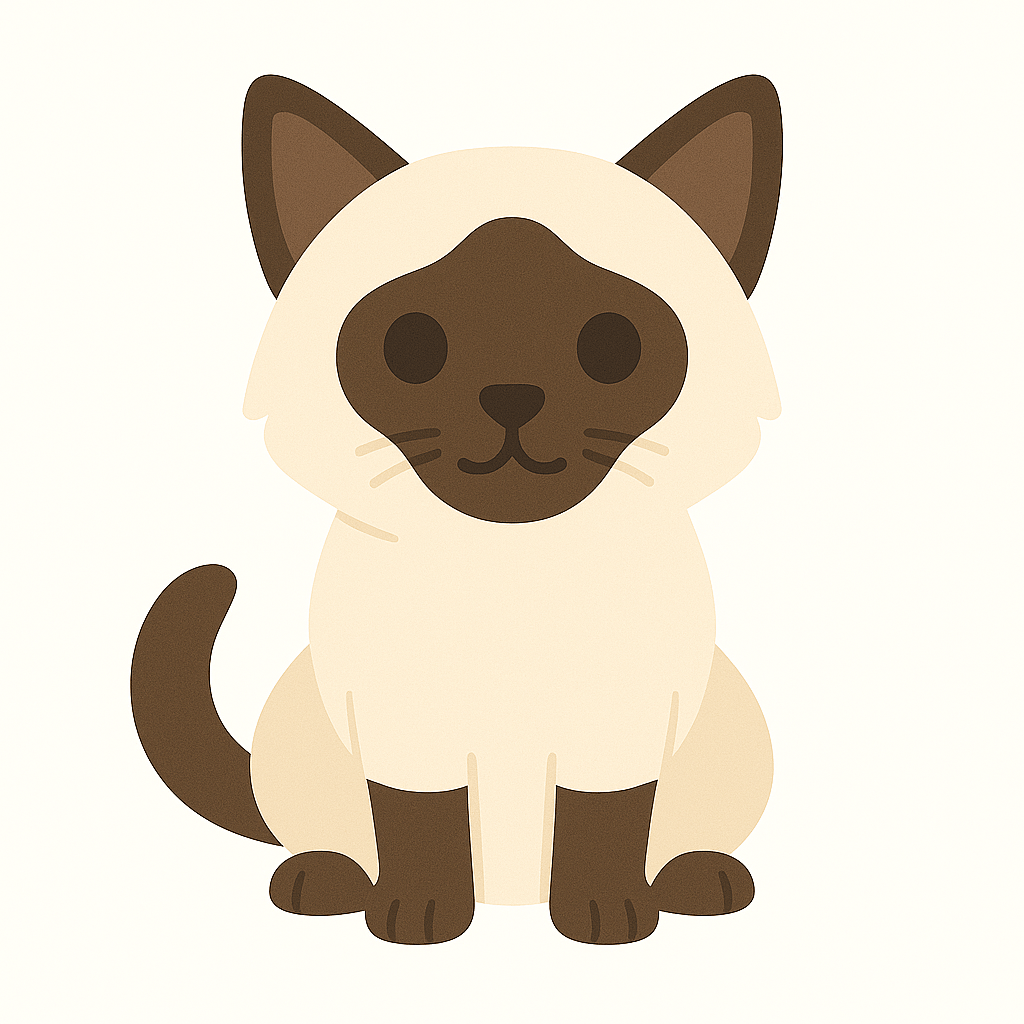
Siamese
The Siamese is one of the most recognizable and ancient cat breeds, originating from Thailand (formerly Siam) where they were treasured by royalty and Buddhist monks. Known for their striking blue almond-shaped eyes, pointed coat pattern, and sleek, muscular build, Siamese cats are instantly recognizable. Their coat features a light-colored body with darker points on the ears, face, legs, and tail, caused by a temperature-sensitive enzyme that produces more pigment in cooler areas of the body. Originally brought to the Western world in the late 1800s, they quickly became popular for their beauty, intelligence, and vocal personality. Siamese cats are considered the foundation breed for many modern pointed breeds and remain one of the most popular cat breeds worldwide.
Temperament
Intelligent, vocal, and highly social with a strong desire for human interaction. Siamese cats are known for their dog-like loyalty and tendency to form strong bonds with their owners. They are extremely vocal and will talk to their humans with a variety of meows, chirps, and calls. These cats are curious, active, and playful throughout their lives, often acting more like dogs than typical cats. They can be demanding of attention and may become anxious or destructive if left alone for long periods. Siamese cats are typically good with children and other pets when properly socialized. They are intelligent problem-solvers who enjoy interactive toys and mental challenges.
Exercise Needs
Siamese cats are active and playful, requiring regular exercise and mental stimulation to stay healthy and happy. They enjoy interactive play sessions with toys that mimic hunting behaviors, such as feather wands and laser pointers. Climbing structures like cat trees are essential for their physical and mental well-being. These intelligent cats need mental challenges to prevent boredom and destructive behavior. They often enjoy puzzle feeders and treat-dispensing toys. Siamese cats may also enjoy supervised outdoor time in secure enclosures or on leashes.
Key Tips:
-
Interactive play sessions (15-30 minutes daily)
-
Feather wands and laser pointers
-
Cat trees and climbing structures
-
Puzzle feeders and treat toys
-
Mental stimulation activities
-
Supervised outdoor time if possible
-
Rotate toys to maintain interest
-
Social play with other cats
Grooming Requirements
Siamese cats have short, fine coats that are relatively low-maintenance compared to long-haired breeds. Weekly brushing is usually sufficient to remove loose hair and distribute natural oils. During shedding seasons, more frequent brushing may be needed. Their coats are naturally glossy and don't typically require frequent bathing unless they get into something messy. Regular nail trimming, ear cleaning, and dental care are important parts of their grooming routine. Pay attention to their eyes, which should be clear and bright, and clean any discharge gently.
Key Tips:
-
Weekly brushing with fine-bristled brush
-
More frequent brushing during shedding
-
Occasional baths only when necessary
-
Regular nail trimming every 2-3 weeks
-
Weekly ear cleaning and inspection
-
Daily dental care or dental treats
-
Eye cleaning if discharge present
-
Check for skin issues or parasites
Nutrition
Siamese cats require high-quality cat food appropriate for their age, activity level, and health status. They are generally active cats with good metabolisms and are less prone to obesity than some breeds, but portion control is still important. Fresh water should always be available. Some Siamese cats may have sensitive stomachs and benefit from limited ingredient diets. They often do well on both wet and dry food combinations. Monitor their weight regularly as they can be prone to both weight loss and weight gain depending on individual factors.
Key Tips:
-
High-quality age-appropriate cat food
-
Combination of wet and dry food
-
Fresh water always available
-
Monitor portion sizes
-
Regular weight monitoring
-
Consider limited ingredient diets for sensitive stomachs
-
Avoid overfeeding treats
-
Adjust food based on activity level and age
Insurance Cost for Siamese
Premiums vary by animal, package and policy terms. Published product prices are reference information; request a current quote. No general market average is provided.
Nutrition Guide
Siamese Nutrition Guide
FEDIAF-based daily calorie and food amount calculators for Siamese. Jump directly to breed-specific feeding scenarios.
Suggested starting weight for this breed: about 5 kg.
Popular calculations for Siamese
- Siamese adult dry food amount
- Siamese kitten feeding amount
- Siamese neutered feeding guide
- Siamese senior feeding guide
Common Health Concerns
Regular preventive care can help detect and manage these conditions early. Schedule annual health screenings with a veterinarian familiar with Siameses.
Progressive Retinal Atrophy (PRA)
ModerateAn inherited eye condition that causes gradual vision loss and can eventually lead to blindness. Siamese cats may be predisposed to certain forms of PRA. Early signs include difficulty seeing in dim light or night blindness. While there is no cure, affected cats can adapt well to vision loss with proper support and environmental management. Genetic testing may be available for breeding cats.
Regular eye examinations by veterinary ophthalmologist, genetic testing for breeding cats, monitor for vision changes or night blindness, provide safe environment
Hypertrophic Cardiomyopathy (HCM)
CommonThe most common heart disease in cats, where the heart muscle becomes abnormally thick, reducing the heart's efficiency. Siamese cats may have a genetic predisposition to HCM. Symptoms can include difficulty breathing, lethargy, loss of appetite, and in severe cases, sudden collapse. Early detection through regular cardiac screening can help manage the condition. Some cats may live normal lives with proper monitoring and treatment.
Regular cardiac examinations and echocardiograms, genetic testing for breeding cats, monitor for breathing difficulties or lethargy, maintain healthy weight
Amyloidosis
UncommonA condition where abnormal protein deposits (amyloid) accumulate in organs, particularly affecting the liver and kidneys in Siamese cats. This breed has a genetic predisposition to developing amyloidosis. Symptoms may include loss of appetite, weight loss, increased thirst and urination, and abdominal swelling. The condition is progressive and can be serious, but early detection and supportive care can help manage symptoms and slow progression.
Regular blood work and organ function tests, monitor for symptoms like appetite loss or weight changes, genetic counseling for breeding, supportive care as needed
Asthma
ModerateSiamese cats may be more prone to developing feline asthma, a respiratory condition that causes inflammation and narrowing of the airways. Symptoms include coughing, wheezing, difficulty breathing, and open-mouth breathing. Triggers can include dust, pollen, smoke, strong scents, and stress. The condition can be managed with medications and by avoiding known triggers. Proper environmental management is crucial for affected cats.
Monitor for respiratory symptoms, identify and avoid triggers, maintain clean air environment, regular veterinary checkups, follow prescribed treatment plans