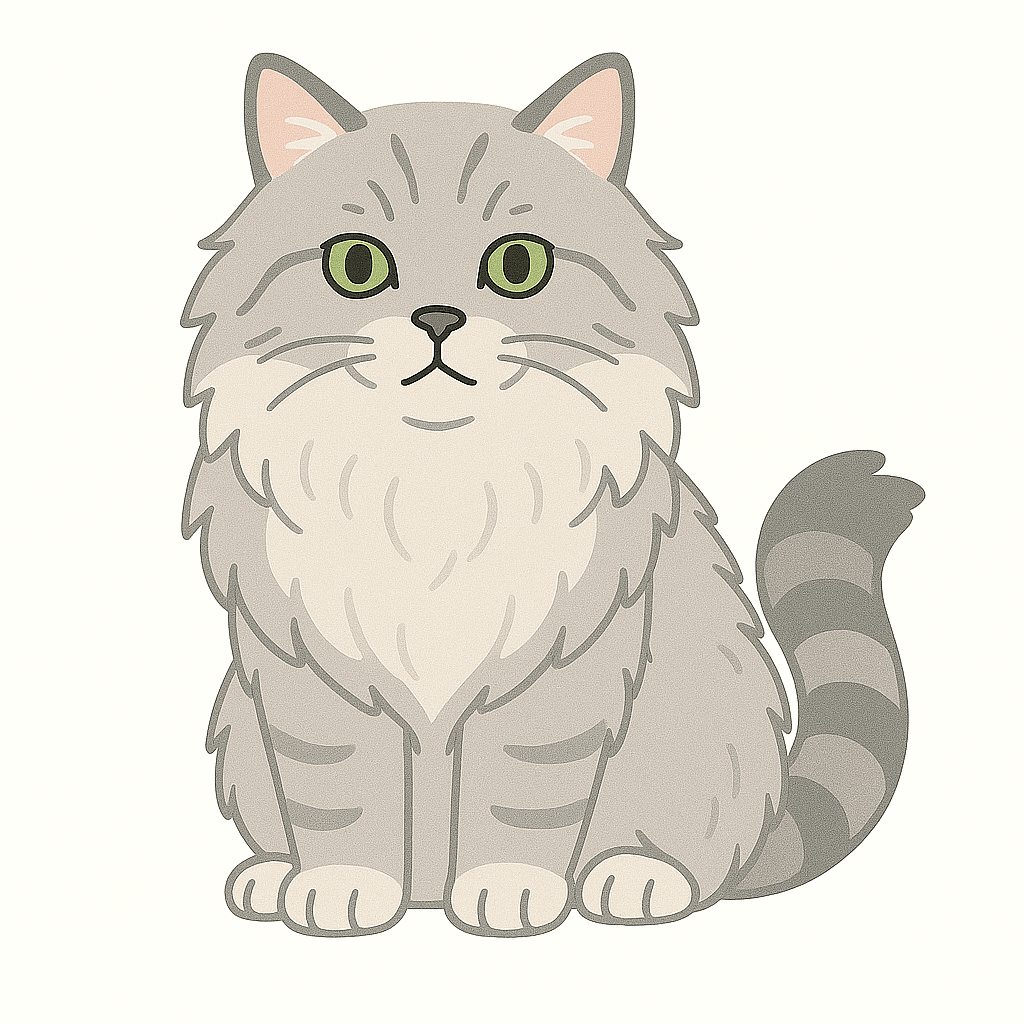
Siberian
The Siberian is a natural breed of domestic cat that originated in Russia, where it has been present for over 1,000 years. These magnificent cats developed in the harsh Siberian climate, resulting in their distinctive triple-layered coat that provides excellent insulation against extreme cold. Known for their large size, muscular build, and stunning variety of colors and patterns, Siberians are often called the gentle giants of the cat world. They are Russia's national cat and have been featured in Russian fairy tales and folklore for centuries. The breed was relatively unknown outside of Russia until the 1990s when they began to be exported to other countries. Siberians are prized for their hypoallergenic qualities, as many produce lower levels of the Fel d 1 protein that typically triggers cat allergies.
Temperament
Gentle, calm, and affectionate with a playful and adventurous spirit. Siberian cats are known for their dog-like loyalty and strong bonds with their families. They are intelligent, curious, and love to explore their environment, often enjoying water play more than typical cats. Despite their large size, they are agile and excellent climbers and jumpers. Siberians are generally good with children and other pets, showing patience and gentleness. They are moderately vocal and will communicate with soft chirps and trills. These cats are known for their problem-solving abilities and can be quite mischievous when bored. They mature slowly, not reaching full size until 3-5 years of age.
Exercise Needs
Siberian cats are active and playful, requiring regular exercise to maintain their physical and mental health. They are natural athletes with excellent climbing and jumping abilities, so providing vertical spaces like cat trees is essential. These cats often enjoy interactive play sessions and may even enjoy water activities, which is unusual for most cats. They benefit from puzzle toys and games that challenge their intelligence. Siberians are curious explorers who enjoy investigating new environments and objects, making environmental enrichment important for their well-being.
Key Tips:
-
Provide tall cat trees and climbing structures
-
Interactive play sessions (20-30 minutes daily)
-
Puzzle toys and treat dispensers
-
Water play opportunities if interested
-
Rotate toys to maintain interest
-
Supervised outdoor exploration if possible
-
Create vertical pathways throughout home
-
Mental stimulation through new experiences
Grooming Requirements
Siberian cats have a magnificent triple-layered coat that requires regular maintenance to keep it healthy and tangle-free. Their coat consists of a soft undercoat, longer guard hairs, and water-repellent outer hairs. Daily brushing is recommended, especially during shedding seasons (spring and fall) when they blow their coat. Despite their long fur, Siberians are surprisingly low-maintenance as their coat is naturally non-matting. Regular nail trimming, ear cleaning, and dental care are important. Many Siberians enjoy being brushed and see it as bonding time with their owners.
Key Tips:
-
Daily brushing with slicker brush and metal comb
-
Increase brushing frequency during shedding seasons
-
Use undercoat rake during heavy shedding periods
-
Regular nail trimming every 2-3 weeks
-
Weekly ear cleaning and inspection
-
Daily dental care or dental treats
-
Occasional baths as needed
-
Check for mats behind ears and under arms
-
Pay attention to seasonal coat changes
Nutrition
Siberian cats require high-quality cat food appropriate for their age, size, and activity level. As large, active cats, they need a diet rich in protein to support their muscle mass and energy needs. Due to their slow maturation (3-5 years), kittens and young adults may need kitten food longer than other breeds. Fresh water should always be available. Some Siberians may be prone to food sensitivities, so monitoring for any adverse reactions is important. Their large size means they may eat more than average cats, so portion control based on body condition is essential.
Key Tips:
-
High-quality cat food appropriate for large breeds
-
Protein-rich diet for muscle maintenance
-
Extended kitten food period due to slow maturation
-
Fresh water always available
-
Monitor for food sensitivities
-
Portion control based on body condition
-
Age-appropriate nutrition adjustments
-
Regular weight monitoring
Insurance Cost for Siberian
Premiums vary by animal, package and policy terms. Published product prices are reference information; request a current quote. No general market average is provided.
Nutrition Guide
Siberian Nutrition Guide
FEDIAF-based daily calorie and food amount calculators for Siberian. Jump directly to breed-specific feeding scenarios.
Suggested starting weight for this breed: about 5 kg.
Popular calculations for Siberian
- Siberian adult dry food amount
- Siberian kitten feeding amount
- Siberian neutered feeding guide
- Siberian senior feeding guide
Common Health Concerns
Regular preventive care can help detect and manage these conditions early. Schedule annual health screenings with a veterinarian familiar with Siberians.
Hypertrophic Cardiomyopathy (HCM)
ModerateThe most common heart disease in cats, where the heart muscle becomes abnormally thick. While Siberians are generally healthy, they can be affected by HCM. Symptoms may include difficulty breathing, lethargy, loss of appetite, and in severe cases, sudden collapse. Early detection through regular cardiac screening can help manage the condition. Some cats may live normal lives with proper monitoring and treatment.
Regular cardiac examinations and echocardiograms, monitor for breathing difficulties or lethargy, maintain healthy weight, genetic testing for breeding cats
Polycystic Kidney Disease (PKD)
UncommonAn inherited condition where cysts develop in the kidneys, potentially leading to kidney failure. While less common in Siberians than in some other breeds, it can still occur. Symptoms may include increased thirst and urination, loss of appetite, weight loss, and lethargy. The condition progresses slowly, and cats may not show symptoms until later in life. Genetic testing is available for breeding cats.
Regular kidney function monitoring through blood work and urinalysis, genetic testing for breeding cats, monitor for increased thirst or urination, maintain proper hydration
Hip Dysplasia
UncommonA genetic condition where the hip joint doesn't develop properly, more commonly seen in dogs but can occasionally affect cats, particularly larger breeds like Siberians. Can cause lameness, difficulty jumping, and reduced mobility. While uncommon in cats, it's worth monitoring in large breeds. Maintaining proper weight and providing appropriate exercise can help reduce the impact if present.
Monitor for mobility issues or lameness, maintain healthy weight, provide appropriate exercise, regular veterinary checkups for large breed cats
Hereditary Cancer Predisposition
UncommonSome lines of Siberian cats may have a slightly increased risk for certain types of cancers, though this is not well-documented and the breed is generally considered healthy. As with all cats, regular veterinary checkups can help with early detection of any health issues. Maintaining a healthy lifestyle with proper nutrition and exercise may help reduce cancer risk. Any unusual lumps, bumps, or changes in behavior should be evaluated by a veterinarian.
Regular veterinary checkups and health screenings, monitor for any unusual lumps or behavioral changes, maintain healthy lifestyle with proper nutrition and exercise, early intervention for any concerns