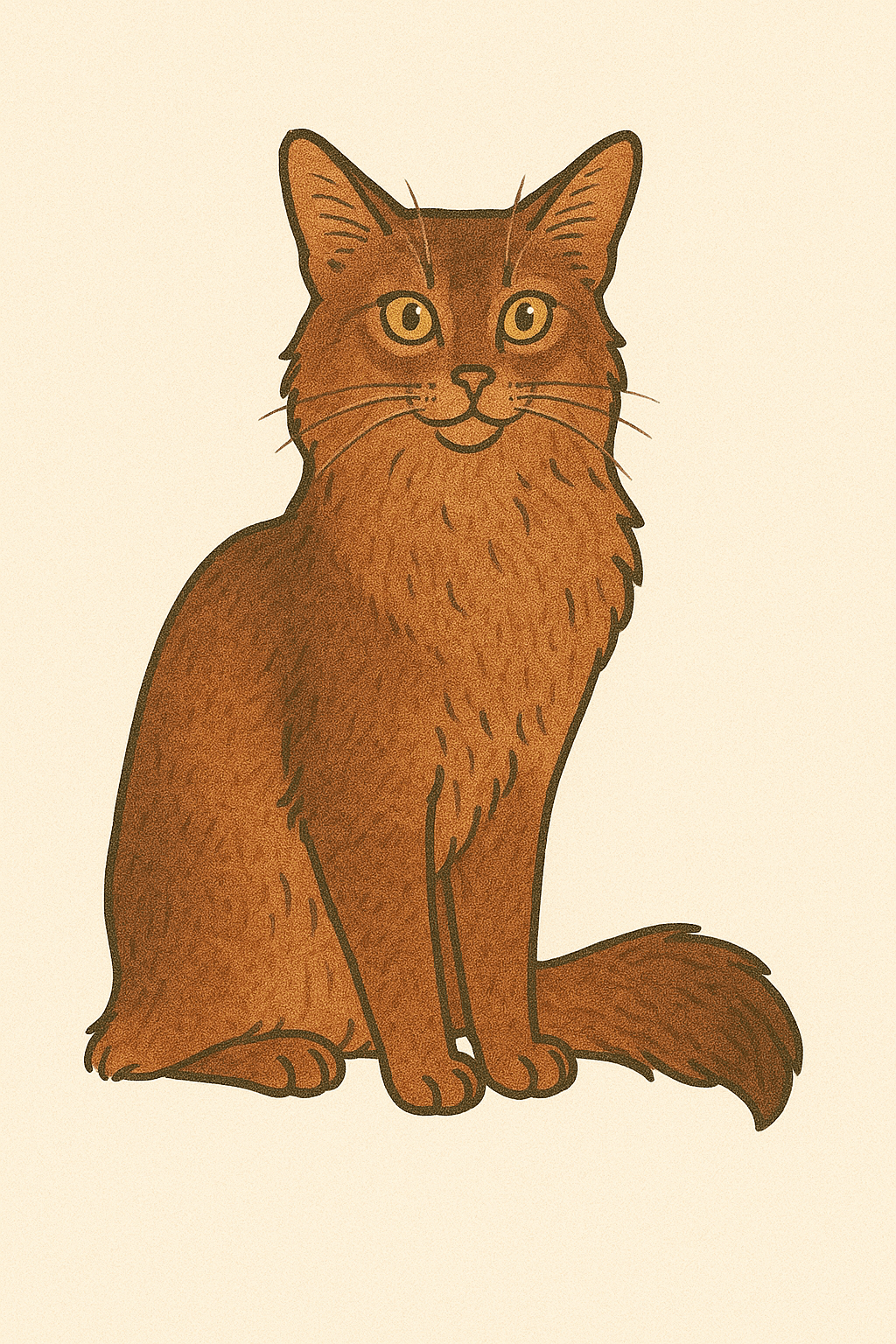
Somali
The Somali is a long-haired variety of the Abyssinian cat, often called the fox cat due to its bushy tail and wild appearance. This breed originated from long-haired kittens that occasionally appeared in Abyssinian litters, and was formally recognized as a separate breed in the 1960s-70s. Somalis have a distinctive ticked coat pattern where each hair has multiple bands of color, creating a warm, glowing appearance. They are medium-sized cats with a muscular, athletic build and large, expressive eyes that can be gold, green, or hazel. Their semi-long coat is soft and silky, requiring more grooming than their Abyssinian cousins.
Temperament
Active, intelligent, and playful with a mischievous and curious nature. Somalis are often described as having a dog-like personality - they are loyal, follow their owners around, and can even be trained to walk on a leash. They are extremely social cats who thrive on interaction and do not like being left alone for long periods. These cats are natural athletes, excellent climbers and jumpers who love to explore high places. They are gentle and affectionate but can be shy with strangers initially. Somalis are known for their soft, chirping vocalizations and their love of water.
Exercise Needs
Somali cats are highly active and athletic, requiring 30-60 minutes of daily exercise and mental stimulation. They are natural climbers and jumpers who love vertical spaces and high perches. These cats have boundless energy and need interactive play to prevent boredom and destructive behavior. They excel at puzzle toys, interactive games, and even agility training. Many Somalis enjoy water play and may be fascinated by running faucets or water features. Providing multiple levels and climbing opportunities is essential for their physical and mental well-being.
Key Tips:
-
Provide tall cat trees and climbing structures
-
Interactive play sessions (30-45 minutes daily)
-
Puzzle toys and treat dispensers
-
Water play opportunities
-
Feather wands and laser pointers
-
Multiple perches at different heights
-
Rotating toy selection to maintain interest
-
Supervised outdoor time if possible
Grooming Requirements
Somali cats have a beautiful semi-long coat that requires regular grooming to maintain its health and appearance. Daily brushing is recommended to prevent matting and reduce shedding, especially during seasonal coat changes. Their coat has a unique texture that is less prone to matting than many long-haired breeds, but regular care is still essential. Use a slicker brush and metal comb to work through the coat thoroughly. Pay special attention to areas prone to matting like behind the ears, under the arms, and the britches. Regular nail trimming, ear cleaning, and dental care are important for overall health.
Key Tips:
-
Daily brushing with slicker brush and metal comb
-
Pay attention to areas prone to matting
-
Increase grooming during shedding seasons
-
Regular nail trimming every 2-3 weeks
-
Weekly ear cleaning and inspection
-
Daily dental care or dental treats
-
Occasional baths as needed
-
Check and maintain coat condition regularly
Nutrition
Somali cats require high-quality cat food appropriate for their age, size, and high activity level. As active, athletic cats, they benefit from a protein-rich diet that supports their muscle development and energy needs. Fresh water should always be available, and many Somalis enjoy drinking from water fountains or running faucets due to their fascination with water. Portion control is important to maintain their athletic build and prevent obesity. Some Somalis may have food sensitivities, so monitoring for adverse reactions is important. Their high energy levels mean they may require more calories than less active breeds.
Key Tips:
-
High-quality, protein-rich cat food
-
Age and activity-appropriate nutrition
-
Fresh water always available, consider fountains
-
Portion control to maintain athletic build
-
Monitor for food sensitivities
-
Higher calorie needs due to activity level
-
Regular feeding schedule
-
Avoid overfeeding treats
Insurance Cost for Somali
Premiums vary by animal, package and policy terms. Published product prices are reference information; request a current quote. No general market average is provided.
Nutrition Guide
Somali Nutrition Guide
FEDIAF-based daily calorie and food amount calculators for Somali. Jump directly to breed-specific feeding scenarios.
Suggested starting weight for this breed: about 5 kg.
Popular calculations for Somali
- Somali adult dry food amount
- Somali kitten feeding amount
- Somali neutered feeding guide
- Somali senior feeding guide
Common Health Concerns
Regular preventive care can help detect and manage these conditions early. Schedule annual health screenings with a veterinarian familiar with Somalis.
Pyruvate Kinase Deficiency (PKD)
ModerateAn inherited enzyme deficiency that affects red blood cell metabolism, leading to anemia. Somalis can inherit this condition from their Abyssinian ancestry. Symptoms include weakness, lethargy, pale gums, and reduced exercise tolerance. The condition varies in severity, and some cats may live relatively normal lives with proper management.
Genetic testing for breeding cats, regular blood work to monitor red blood cell levels, watch for signs of anemia like pale gums or lethargy, avoid strenuous exercise if affected
Gingivitis and Dental Disease
CommonSomali cats can be prone to dental issues including gingivitis and periodontal disease. This may be related to their genetic background and diet. Symptoms include bad breath, red or swollen gums, difficulty eating, and excessive drooling. Regular dental care and professional cleanings can help prevent and manage these conditions.
Daily dental care with brushing or dental treats, regular professional dental cleanings, monitor for signs of dental disease, provide dental-friendly toys and food
Patellar Luxation
UncommonA condition where the kneecap dislocates from its normal position. While more common in dogs, it can occasionally affect cats, particularly active breeds like Somalis. Symptoms may include lameness, difficulty jumping, or an abnormal gait. Most cases are mild and may not require treatment, but severe cases might need surgical intervention.
Regular veterinary checkups, monitor for lameness or abnormal gait, maintain healthy weight to reduce joint stress, provide appropriate exercise without overexertion