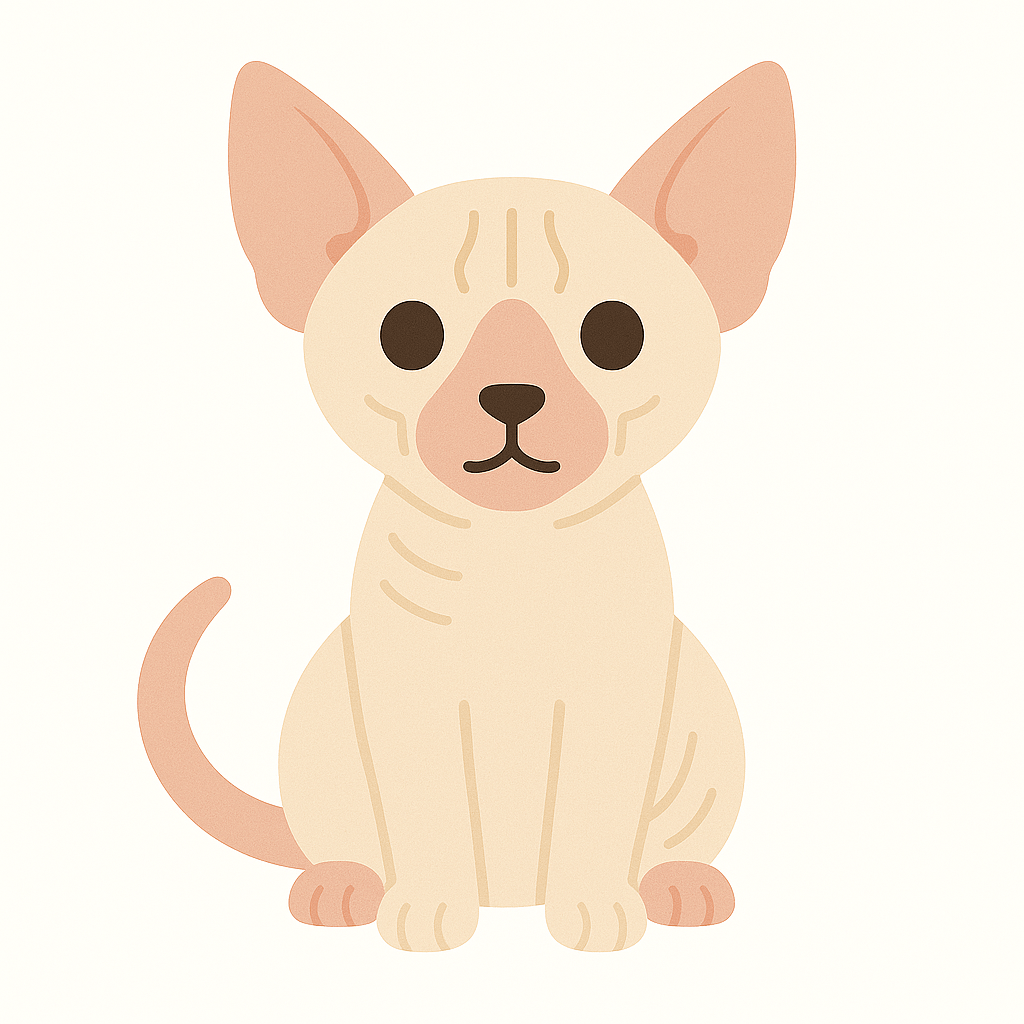
Sphynx
The Sphynx is a distinctive hairless cat breed that originated in Canada in the 1960s from a natural genetic mutation. Despite their lack of fur, Sphynx cats are not completely hairless - they have a fine layer of downy fuzz that gives their skin a suede-like texture. Their skin can display the same color and pattern variations as a furred cat would in their coat. Sphynx cats are medium-sized with a muscular, sturdy build, large ears, and prominent cheekbones. They are known for their warm body temperature, which is actually the same as other cats but feels warmer due to the lack of fur insulation.
Temperament
Energetic, outgoing, and extremely affectionate with a dog-like personality. Sphynx cats are known for being extroverted, attention-seeking, and highly social. They form strong bonds with their families and often follow their owners around the house. These cats are intelligent, curious, and mischievous, always getting into things and exploring. They are excellent with children and other pets, showing patience and playfulness. Sphynx cats are heat-seekers who love warm places and will often be found sunbathing or snuggling under blankets. They are vocal cats who enjoy talking to their humans.
Exercise Needs
Sphynx cats are active and playful, requiring 25-45 minutes of daily exercise and mental stimulation. They are natural entertainers who love interactive play and showing off for their families. These cats enjoy climbing, jumping, and exploring, so providing cat trees and vertical spaces is important. They are intelligent and benefit from puzzle toys and games that challenge their minds. Sphynx cats often enjoy playing fetch and can be trained to perform tricks. Their high energy levels and social nature make them excellent candidates for interactive play sessions with their owners.
Key Tips:
-
Interactive play sessions daily
-
Provide cat trees and climbing structures
-
Puzzle toys and treat dispensers
-
Warm play areas and heated beds
-
Feather wands and laser pointers
-
Training sessions for tricks and commands
-
Social play with family members
-
Mental stimulation through new experiences
Grooming Requirements
Sphynx cats require unique grooming care due to their lack of fur. Their skin needs regular bathing (weekly or bi-weekly) with gentle, cat-safe shampoo to remove oil buildup and prevent skin issues. They are prone to acne and blackheads, especially around the chin and tail area. Sun protection is crucial - they can get sunburned and should have limited sun exposure or use pet-safe sunscreen. In cold weather, they need warm clothing or heated areas. Regular nail trimming, ear cleaning, and dental care are important. Their skin should be moisturized with cat-safe lotions to prevent dryness.
Key Tips:
-
Weekly or bi-weekly baths with cat-safe shampoo
-
Sun protection - limit exposure or use pet sunscreen
-
Warm clothing in cold weather
-
Regular skin moisturizing with cat-safe products
-
Monitor for acne and blackheads
-
Regular nail trimming every 2-3 weeks
-
Weekly ear cleaning and inspection
-
Daily dental care
-
Check skin for irritation or dryness
Nutrition
Sphynx cats have higher metabolic rates than most cats due to their lack of fur, requiring more calories to maintain their body temperature. They need high-quality, protein-rich cat food appropriate for their age and activity level. Fresh water should always be available. These cats often have hearty appetites and may be prone to overeating, so portion control is important to prevent obesity. Some Sphynx cats may have food sensitivities or allergies, so monitoring for adverse reactions is important. Their higher energy needs mean they may require more frequent feeding than other cats.
Key Tips:
-
High-quality, protein-rich cat food
-
Higher calorie needs due to lack of fur
-
Portion control to prevent overeating
-
Fresh water always available
-
More frequent feeding may be needed
-
Monitor for food sensitivities
-
Age-appropriate nutrition
-
Warm feeding areas in cold weather
Insurance Cost for Sphynx
Premiums vary by animal, package and policy terms. Published product prices are reference information; request a current quote. No general market average is provided.
Nutrition Guide
Sphynx Nutrition Guide
FEDIAF-based daily calorie and food amount calculators for Sphynx. Jump directly to breed-specific feeding scenarios.
Suggested starting weight for this breed: about 5 kg.
Popular calculations for Sphynx
- Sphynx adult dry food amount
- Sphynx kitten feeding amount
- Sphynx neutered feeding guide
- Sphynx senior feeding guide
Common Health Concerns
Regular preventive care can help detect and manage these conditions early. Schedule annual health screenings with a veterinarian familiar with Sphynxs.
Hypertrophic Cardiomyopathy (HCM)
ModerateThe most common heart disease in cats, where the heart muscle becomes abnormally thick. Sphynx cats can be affected by this genetic condition. Symptoms may include difficulty breathing, lethargy, loss of appetite, and in severe cases, sudden collapse. Early detection through regular cardiac screening is important for management.
Annual cardiac examinations and echocardiograms, monitor for breathing difficulties or lethargy, genetic testing for breeding cats, maintain healthy weight
Skin Conditions and Dermatitis
CommonSphynx cats are prone to various skin issues due to their lack of protective fur. Common problems include acne, blackheads, fungal infections, sunburn, and contact dermatitis. Their skin can be sensitive to temperature changes, certain fabrics, and skincare products. Regular skin care and monitoring are essential for maintaining healthy skin.
Regular skin inspections, gentle bathing routine, use cat-safe skincare products, protect from sun exposure, monitor for skin changes or irritation, maintain proper temperature control
Hereditary Myopathy
UncommonA genetic muscle disorder that can affect Sphynx cats, causing muscle weakness and fatigue. Symptoms may include difficulty walking, muscle tremors, and exercise intolerance. The condition can vary in severity, and some cats may have mild symptoms while others are more severely affected. There is no cure, but supportive care can help manage symptoms.
Genetic testing for breeding cats, monitor for muscle weakness or exercise intolerance, regular veterinary checkups, avoid overexertion, provide supportive care as needed