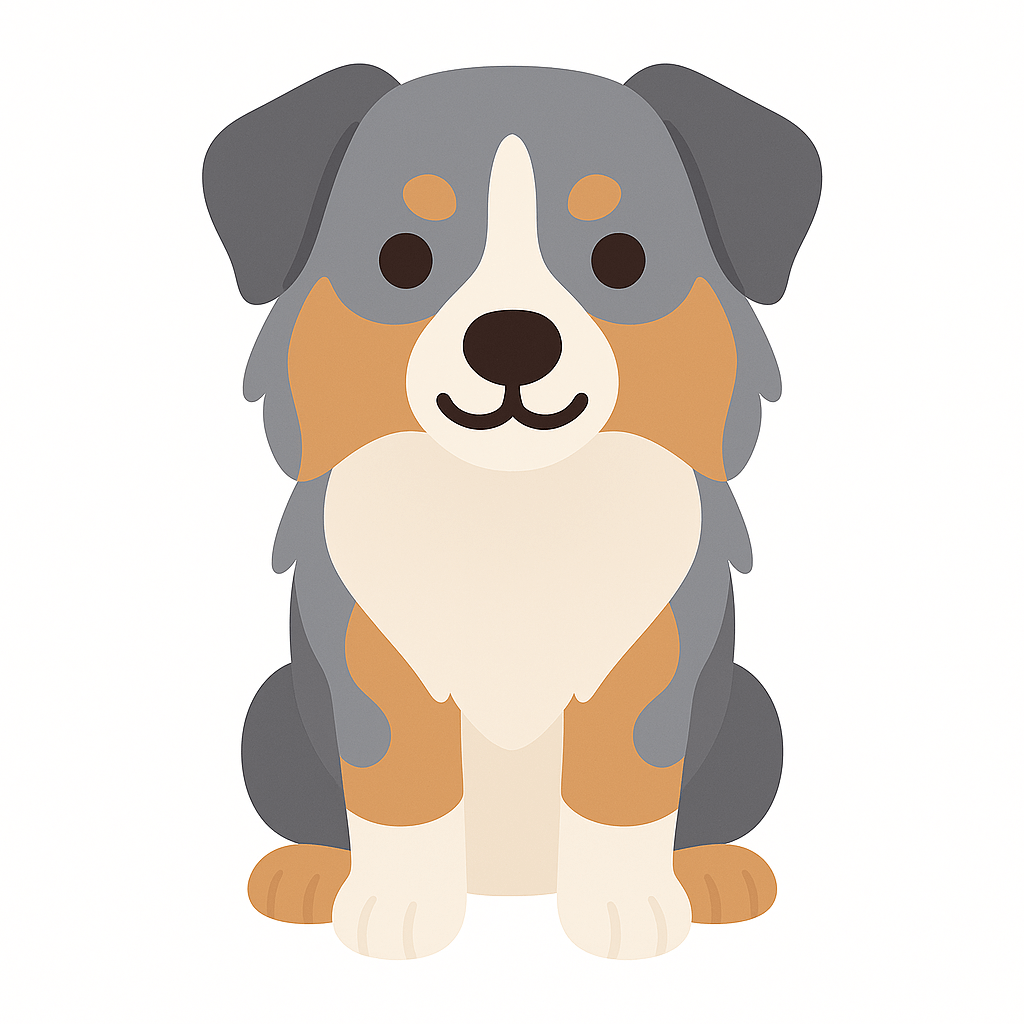
Australian Shepherd
The Australian Shepherd is a highly intelligent, versatile working dog originally developed in the American West for herding livestock. Despite the name, they were refined in the United States and are known for their striking coat colors including merle patterns.
Temperament
Intelligent, energetic, loyal, and eager to please. Strong herding instincts and high work drive. Can be reserved with strangers but devoted to family. Requires mental and physical stimulation.
Exercise Needs
Australian Shepherds need 90-150 minutes of vigorous daily exercise. They excel at agility, herding trials, frisbee, and hiking. Mental stimulation is as important as physical exercise.
Key Tips:
-
Daily long walks or runs (60-90 min)
-
Agility training and courses
-
Herding activities or trials
-
Frisbee and fetch games
-
Hiking and outdoor adventures
Grooming Requirements
Moderate to high grooming needs due to double coat. Daily brushing prevents matting and reduces shedding. Professional grooming every 6-8 weeks recommended.
Key Tips:
-
Daily brushing with slicker brush
-
Weekly thorough brushing sessions
-
Professional grooming every 6-8 weeks
-
Regular nail trims and ear cleaning
-
Seasonal coat blowouts require extra attention
Nutrition
High-quality diet for active medium-sized dogs. Adjust portions based on activity level. Some Australian Shepherds may have food sensitivities requiring special diets.
Key Tips:
-
Premium dog food for active breeds
-
High protein content (22-28%)
-
Adjust portions for activity level
-
Monitor for food allergies
-
Fresh water always available
Insurance Cost for Australian Shepherd
Premiums vary by animal, package and policy terms. Published product prices are reference information; request a current quote. No general market average is provided.
Nutrition Guide
Australian Shepherd Nutrition Guide
FEDIAF-based daily calorie and food amount calculators for Australian Shepherd. Jump directly to breed-specific feeding scenarios.
Suggested starting weight for this breed: about 20 kg.
Popular calculations for Australian Shepherd
- Australian Shepherd 20 kg adult feeding amount
- Australian Shepherd 20 kg intact feeding amount
- Australian Shepherd puppy feeding amount
- Australian Shepherd senior feeding guide
Common Health Concerns
Regular preventive care can help detect and manage these conditions early. Schedule annual health screenings with a veterinarian familiar with Australian Shepherds.
Hip Dysplasia
CommonGenetic condition affecting hip joint development, common in medium to large breeds like Australian Shepherds.
Hip scoring and X-rays recommended for breeding dogs
Hereditary Eye Diseases
CommonVarious eye conditions including cataracts, progressive retinal atrophy, and collie eye anomaly can affect Australian Shepherds.
Annual eye exams by veterinary ophthalmologist, genetic testing
Epilepsy
UncommonSeizure disorder that can affect Australian Shepherds, often hereditary and manageable with proper veterinary care.
Neurological evaluation if seizures occur, genetic counseling
MDR1 Gene Mutation
CommonGenetic mutation affecting drug metabolism, making some medications toxic. Common in herding breeds including Australian Shepherds.
Genetic testing recommended, inform veterinarians of status