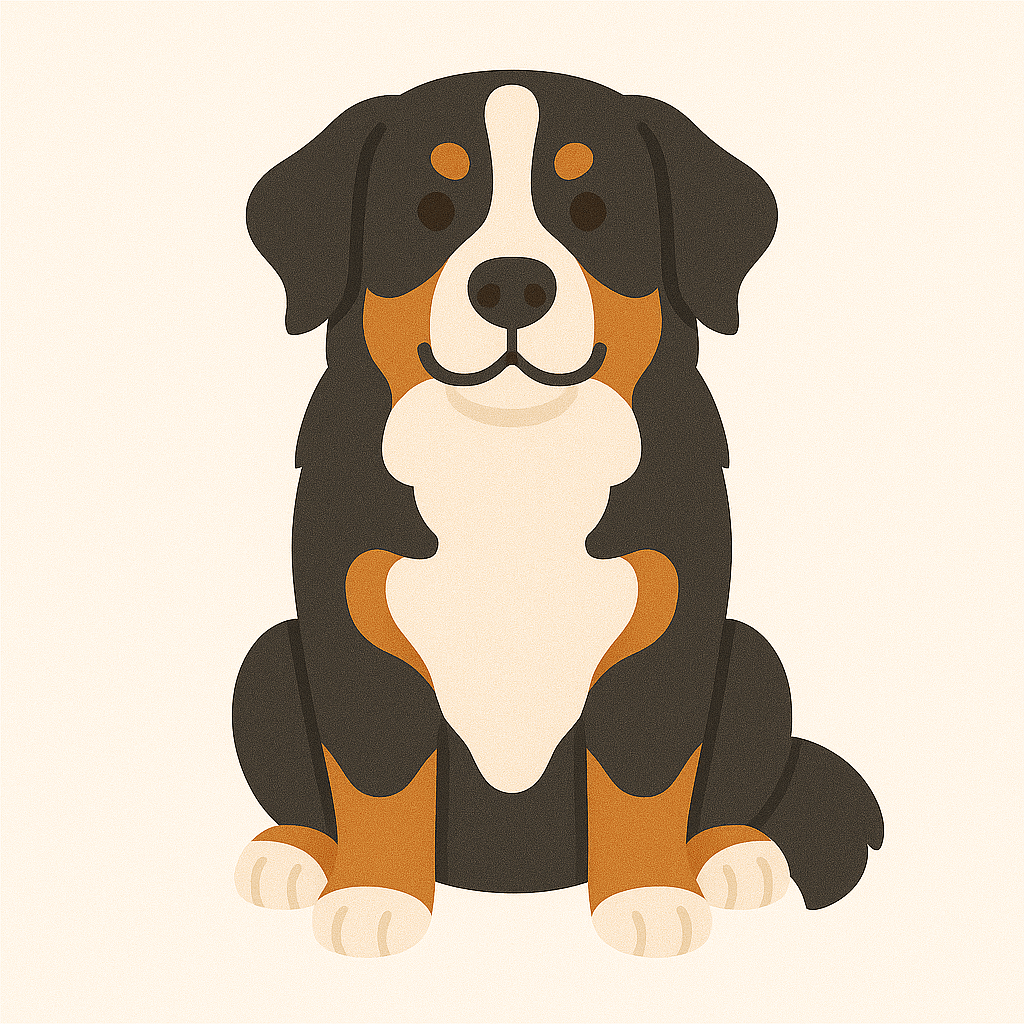
Bernese Mountain Dog
The Bernese Mountain Dog is a large, gentle Swiss working breed known for their striking tri-color coat and calm, friendly temperament. Originally bred for farm work in the Swiss Alps, they are characterized by their patient nature, loyalty to family, and gentle disposition with children. Despite their size, they are known as gentle giants.
Temperament
Gentle, patient, and friendly with a calm demeanor. Excellent with children and known for their sweet, affectionate nature. Generally good with other pets when properly socialized. Can be somewhat reserved with strangers but not aggressive. Intelligent and eager to please.
Exercise Needs
Bernese Mountain Dogs have moderate exercise needs, requiring 30-60 minutes of daily activity. They prefer leisurely walks and gentle play rather than intense exercise. Due to their size and joint concerns, avoid high-impact activities. They enjoy cooler weather and may be less active in hot conditions.
Key Tips:
-
Daily leisurely walks (30-45 min)
-
Gentle play sessions in yard
-
Swimming for low-impact exercise
-
Avoid jumping and high-impact activities
-
Exercise in cooler parts of the day
-
Mental stimulation with puzzle toys
-
Short hiking on easy trails
Grooming Requirements
Bernese Mountain Dogs have high grooming needs due to their thick, long double coat. They shed heavily year-round with seasonal peaks. Daily brushing is recommended to prevent matting and manage shedding. Professional grooming every 6-8 weeks helps maintain coat health.
Key Tips:
-
Daily brushing with pin brush and undercoat rake
-
Weekly thorough grooming sessions
-
Regular nail trims every 2-3 weeks
-
Ear cleaning and inspection weekly
-
Monthly baths or as needed
-
Professional grooming every 6-8 weeks
-
Extra brushing during shedding seasons
Nutrition
Bernese Mountain Dogs require high-quality, large-breed specific food to support their size and prevent developmental issues. Feed 2-3 meals daily with measured portions to prevent overeating and bloat. Monitor weight carefully as they can be prone to obesity, which exacerbates joint problems.
Key Tips:
-
Large-breed specific, high-quality dog food
-
Measured portions to prevent overeating
-
Two to three meals per day
-
Avoid feeding immediately before/after exercise
-
Monitor weight regularly
-
Joint-supporting supplements if recommended
-
Fresh water always available
Insurance Cost for Bernese Mountain Dog
Premiums vary by animal, package and policy terms. Published product prices are reference information; request a current quote. No general market average is provided.
Nutrition Guide
Bernese Mountain Dog Nutrition Guide
FEDIAF-based daily calorie and food amount calculators for Bernese Mountain Dog. Jump directly to breed-specific feeding scenarios.
Suggested starting weight for this breed: about 20 kg.
Popular calculations for Bernese Mountain Dog
- Bernese Mountain Dog 20 kg adult feeding amount
- Bernese Mountain Dog 20 kg intact feeding amount
- Bernese Mountain Dog puppy feeding amount
- Bernese Mountain Dog senior feeding guide
Common Health Concerns
Regular preventive care can help detect and manage these conditions early. Schedule annual health screenings with a veterinarian familiar with Bernese Mountain Dogs.
Cancer (Various Types)
Very CommonUnfortunately, cancer is very common in Bernese Mountain Dogs, affecting a significant percentage of the breed. Various types including histiocytic sarcoma, osteosarcoma, and lymphoma are seen. Early detection and regular health monitoring are crucial.
Regular comprehensive health exams, cancer screening protocols, early symptom awareness
Hip Dysplasia
CommonA genetic condition affecting the hip joints, common in large breeds like Bernese Mountain Dogs. Can cause pain, lameness, and arthritis. Weight management and appropriate exercise are important for management.
Hip scoring for breeding dogs, maintain healthy weight, appropriate exercise
Elbow Dysplasia
CommonDevelopmental condition of the elbow joint causing lameness in front legs. Can lead to arthritis and chronic pain if untreated. Common in large, fast-growing breeds.
Elbow scoring for breeding, controlled exercise during growth, weight management
Bloat (GDV)
UncommonLife-threatening condition where stomach fills with gas and may twist. More common in deep-chested, large breeds. Requires immediate emergency veterinary treatment.
Feed smaller frequent meals, avoid exercise after eating, gastropexy surgery consideration
Progressive Retinal Atrophy (PRA)
UncommonHereditary eye disease causing gradual vision loss and eventual blindness. Important for breeding decisions and genetic screening.
Annual eye examinations, genetic testing for breeding