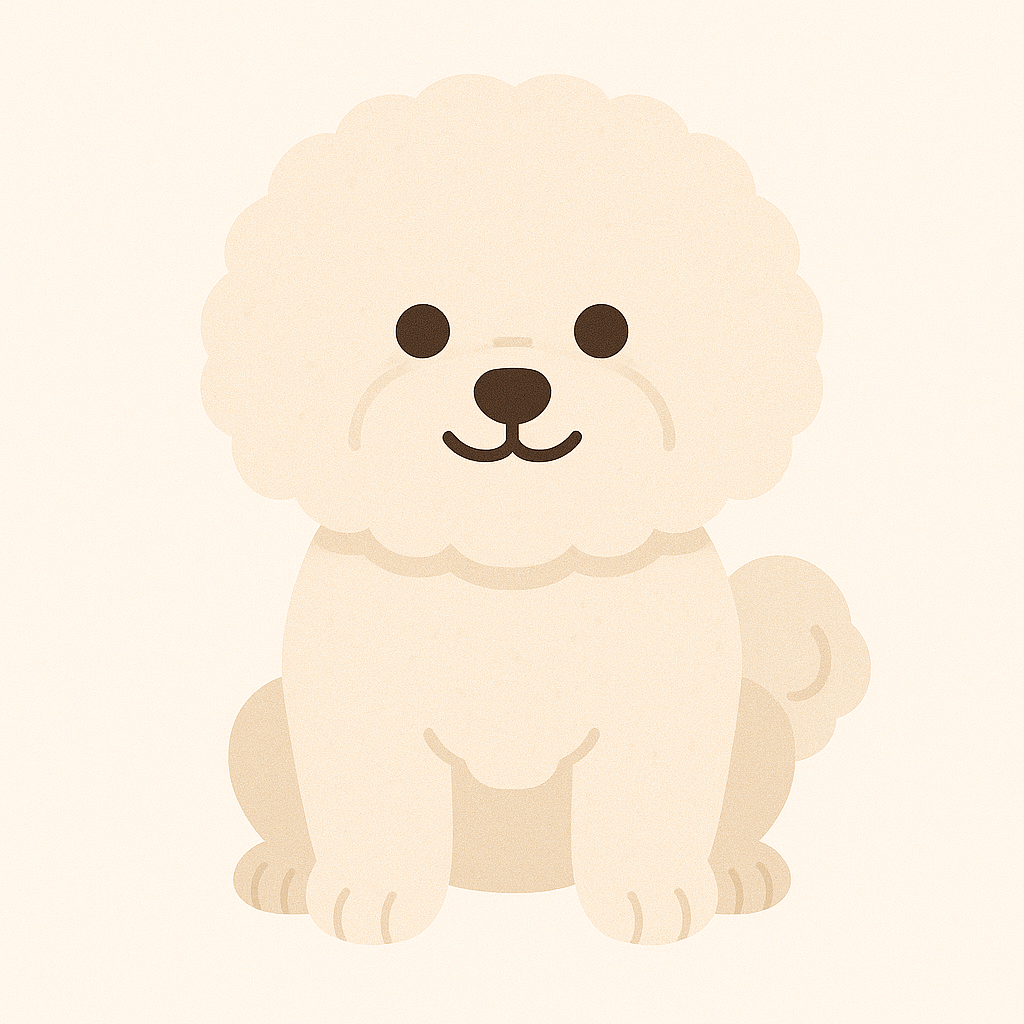
Bichon Frise
The Bichon Frise is a small, cheerful companion breed known for their fluffy white coat and friendly disposition. Originally from the Canary Islands, they were bred as companion dogs for nobility and sailors. They are characterized by their hypoallergenic coat, playful nature, and adaptability to various living situations.
Temperament
Cheerful, playful, and affectionate with a gentle and friendly nature. Excellent with children and generally good with other pets. Social and outgoing, they thrive on human companionship. Can be somewhat sensitive and may suffer from separation anxiety if left alone for long periods.
Exercise Needs
Bichon Frises have moderate exercise needs, requiring 30-60 minutes of daily activity. They enjoy walks, playtime, and interactive games. Despite their small size, they are energetic and benefit from both physical exercise and mental stimulation. Indoor play can meet much of their exercise needs.
Key Tips:
-
Daily walks (20-30 minutes)
-
Indoor play sessions
-
Interactive toy games
-
Agility training for small dogs
-
Socialization at dog parks
-
Mental stimulation puzzles
-
Short hiking on easy trails
Grooming Requirements
Bichon Frises have high grooming needs due to their double coat that grows continuously. Daily brushing is essential to prevent matting, and professional grooming every 4-6 weeks is recommended. They are considered hypoallergenic as they shed minimally, but require regular maintenance to keep their coat healthy.
Key Tips:
-
Daily brushing with slicker brush
-
Professional grooming every 4-6 weeks
-
Regular nail trims every 2-3 weeks
-
Weekly ear cleaning and inspection
-
Monthly baths with gentle shampoo
-
Eye area cleaning to prevent staining
-
Dental care 2-3 times weekly
Nutrition
Bichon Frises require high-quality small-breed specific food with appropriate kibble size. They can be prone to weight gain, so portion control is important. Feed 2-3 small meals daily rather than one large meal. Some may have food sensitivities or allergies requiring special diets.
Key Tips:
-
High-quality small-breed dog food
-
Appropriate kibble size for small mouths
-
Measured portions to prevent weight gain
-
Two to three small meals per day
-
Fresh water always available
-
Monitor for food allergies or sensitivities
-
Avoid overfeeding treats
Insurance Cost for Bichon Frise
Premiums vary by animal, package and policy terms. Published product prices are reference information; request a current quote. No general market average is provided.
Nutrition Guide
Bichon Frise Nutrition Guide
FEDIAF-based daily calorie and food amount calculators for Bichon Frise. Jump directly to breed-specific feeding scenarios.
Suggested starting weight for this breed: about 5 kg.
Popular calculations for Bichon Frise
- Bichon Frise 5 kg adult feeding amount
- Bichon Frise 5 kg intact feeding amount
- Bichon Frise puppy feeding amount
- Bichon Frise senior feeding guide
Common Health Concerns
Regular preventive care can help detect and manage these conditions early. Schedule annual health screenings with a veterinarian familiar with Bichon Frises.
Patellar Luxation
CommonKneecap dislocation common in small breeds. Can cause lameness and discomfort. Ranges from mild to severe, with severe cases requiring surgical correction.
Regular orthopedic examinations, monitor for lameness, maintain healthy weight
Hip Dysplasia
UncommonLess common in small breeds but can still occur. Affects hip joint development and can cause mobility issues and arthritis.
Hip screening for breeding dogs, maintain healthy weight, appropriate exercise
Progressive Retinal Atrophy (PRA)
UncommonHereditary eye condition that can lead to blindness. Important for breeding decisions and genetic screening.
Annual eye examinations, genetic testing for breeding
Allergies and Skin Sensitivities
CommonBichon Frises can be prone to various allergies including food, environmental, and contact allergies. Can manifest as skin irritation, itching, and coat problems.
Allergy testing, hypoallergenic diet trials, regular skin and coat monitoring