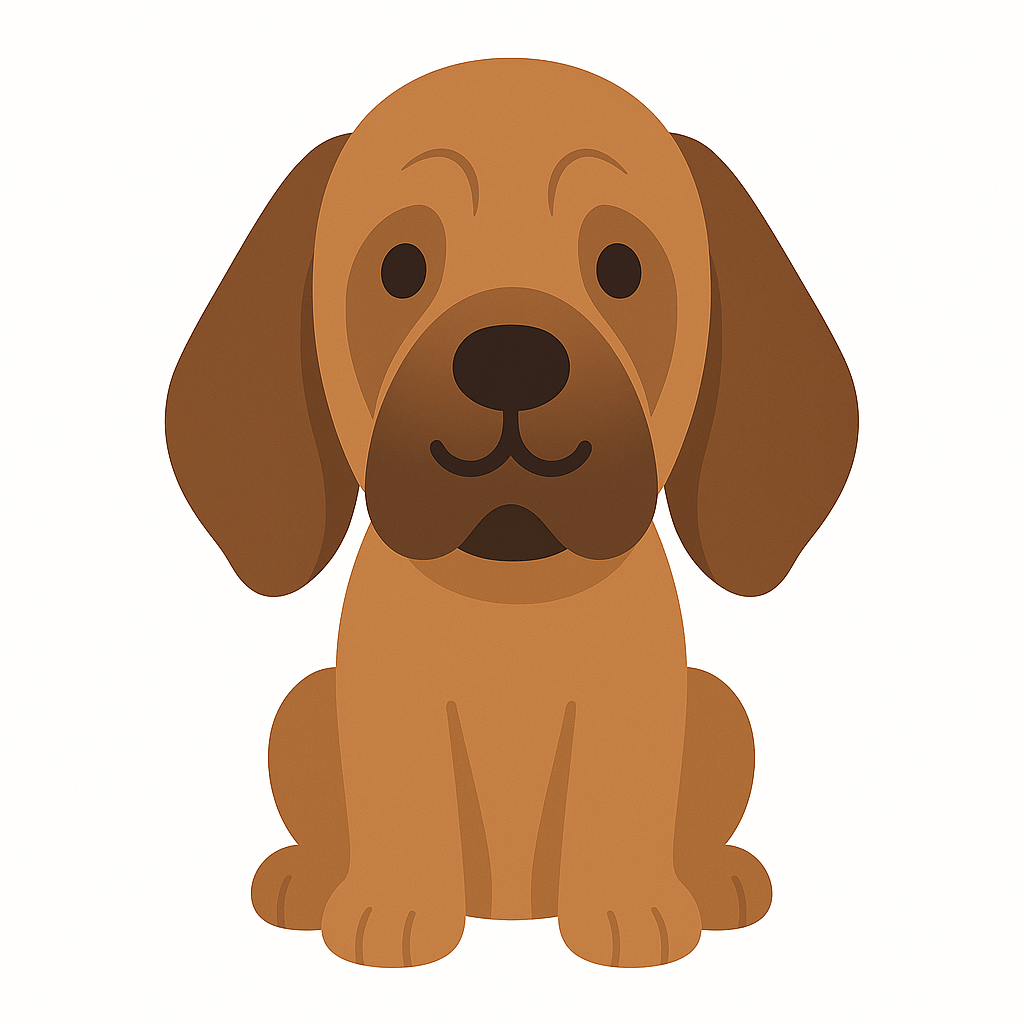
Bloodhound
The Bloodhound is a large scent hound breed renowned for having the most accurate sense of smell of any dog breed. Originally developed in Belgium for tracking game, they are characterized by their exceptional scenting ability, distinctive wrinkled face, and long drooping ears. Their tracking skills are so reliable that evidence from Bloodhound tracking is admissible in court.
Temperament
Gentle, patient, and even-tempered despite their imposing size. Known for their calm and friendly nature, especially with children. Can be somewhat independent and stubborn, particularly when following a scent. Generally good with other dogs and pets when properly socialized. Reserved but not aggressive with strangers.
Exercise Needs
Bloodhounds need 60-90 minutes of daily exercise but prefer steady, moderate activity rather than intense bursts. They excel at scent work and tracking activities. Due to their strong scenting drive, they should always be kept on leash or in securely fenced areas to prevent them from wandering off following interesting scents.
Key Tips:
-
Daily walks with secure leash (45-60 min)
-
Scent work and tracking exercises
-
Secure fenced yard for free running
-
Avoid off-leash exercise in open areas
-
Mental stimulation through nose work
-
Swimming for low-impact exercise
-
Moderate hiking on established trails
Grooming Requirements
Bloodhounds have moderate grooming needs with their short, dense coat. They shed moderately year-round. Special attention is needed for their facial wrinkles and long ears to prevent infections. Regular cleaning of skin folds is essential to maintain hygiene and prevent bacterial growth.
Key Tips:
-
Weekly brushing with rubber brush
-
Daily cleaning of facial wrinkles
-
Regular ear cleaning and inspection
-
Monthly nail trims
-
Occasional baths as needed
-
Check and clean skin folds regularly
-
Dental care 2-3 times weekly
Nutrition
Bloodhounds require high-quality, large-breed specific food to support their size and prevent developmental issues. Due to their deep chest, they are prone to bloat, so feeding 2-3 smaller meals daily is recommended rather than one large meal. Monitor eating speed and avoid exercise immediately after meals.
Key Tips:
-
Large-breed specific, high-quality dog food
-
Two to three measured meals per day
-
Slow-feeding bowls to prevent gulping
-
Avoid exercise 1-2 hours after eating
-
Fresh water always available
-
Monitor weight to prevent obesity
-
High-protein diet for active dogs
Insurance Cost for Bloodhound
Premiums vary by animal, package and policy terms. Published product prices are reference information; request a current quote. No general market average is provided.
Nutrition Guide
Bloodhound Nutrition Guide
FEDIAF-based daily calorie and food amount calculators for Bloodhound. Jump directly to breed-specific feeding scenarios.
Suggested starting weight for this breed: about 20 kg.
Popular calculations for Bloodhound
- Bloodhound 20 kg adult feeding amount
- Bloodhound 20 kg intact feeding amount
- Bloodhound puppy feeding amount
- Bloodhound senior feeding guide
Common Health Concerns
Regular preventive care can help detect and manage these conditions early. Schedule annual health screenings with a veterinarian familiar with Bloodhounds.
Bloat (GDV)
CommonLife-threatening condition where stomach fills with gas and may twist. More common in deep-chested breeds like Bloodhounds. Requires immediate emergency veterinary treatment. Can be fatal within hours if untreated.
Feed smaller frequent meals, avoid exercise after eating, gastropexy surgery consideration, know emergency signs
Hip Dysplasia
CommonGenetic condition affecting hip joint development, common in large breeds. Can cause lameness, pain, and arthritis. Weight management and appropriate exercise are important for management.
Hip scoring for breeding dogs, maintain healthy weight, appropriate exercise
Ear Infections
CommonLong, drooping ears create warm, moist environment perfect for bacterial and yeast growth. Regular cleaning and inspection essential to prevent chronic infections.
Daily ear cleaning and inspection, keep ears dry, regular veterinary ear checks
Ectropion and Entropion
CommonEyelid conditions where the eyelid turns outward (ectropion) or inward (entropion). Can cause eye irritation, infections, and vision problems. May require surgical correction in severe cases.
Regular eye examinations, keep eye area clean, monitor for irritation signs
Skin Fold Dermatitis
CommonInflammation and infection of skin folds, particularly around the face and neck area. Caused by moisture, bacteria, and yeast accumulation in deep wrinkles. Requires regular cleaning and monitoring.
Daily cleaning of facial wrinkles, keep skin folds dry, regular inspection for signs of infection