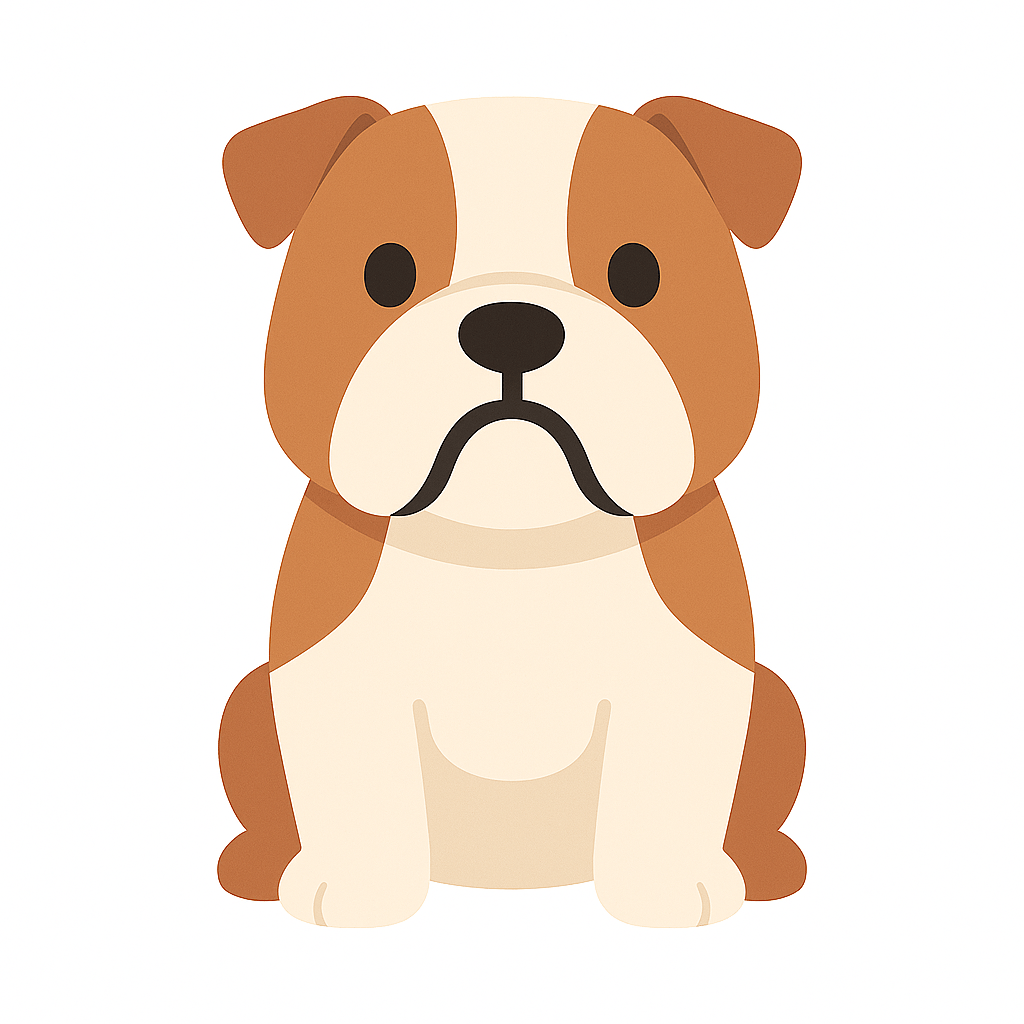
Bulldog
The English Bulldog is a medium-sized breed known for their distinctive wrinkled face, muscular build, and gentle disposition. Originally bred for bull-baiting in England, modern Bulldogs have evolved into loving family companions. They are characterized by their brachycephalic features, loyal nature, and calm demeanor, making them excellent indoor pets despite their somewhat intimidating appearance.
Temperament
Gentle, calm, and courageous with a friendly disposition toward family members. Known for their patience with children and strong loyalty to their owners. Can be stubborn during training but are generally well-behaved. They are naturally protective but not aggressive, making them good watchdogs. Content to be couch potatoes but enjoy moderate interaction.
Exercise Needs
Bulldogs have very low exercise needs due to their brachycephalic features and tendency to overheat. They require only 15-30 minutes of gentle daily activity. Avoid exercise in hot weather and watch for signs of breathing difficulties. Short, leisurely walks and indoor play are ideal for maintaining their health without overexertion.
Key Tips:
-
Short, leisurely walks (15-20 min)
-
Indoor play sessions
-
Avoid exercise in hot weather
-
Monitor breathing during activity
-
Swimming with supervision (if they enjoy water)
-
Mental stimulation through puzzle toys
-
Air-conditioned environments during summer
-
Rest breaks during any activity
Grooming Requirements
Bulldogs have moderate grooming needs with special attention required for their facial wrinkles and skin folds. Daily cleaning of wrinkles is essential to prevent infections. Their short coat requires weekly brushing, and they shed moderately year-round. Regular nail trims and dental care are important due to their sedentary lifestyle.
Key Tips:
-
Daily cleaning of facial wrinkles and folds
-
Weekly brushing with rubber brush
-
Regular nail trims every 2-3 weeks
-
Daily dental care due to dental issues
-
Ear cleaning weekly
-
Occasional baths as needed
-
Use gentle, hypoallergenic products
-
Check and clean tail pocket if present
Nutrition
Bulldogs are prone to obesity and require careful portion control and high-quality food. They should be fed 2-3 small meals daily to prevent overeating and reduce the risk of bloat. Monitor their weight closely as excess weight can worsen breathing problems and joint issues. Choose foods appropriate for their age and activity level.
Key Tips:
-
High-quality dog food for medium breeds
-
Two to three small meals per day
-
Measured portions to prevent overeating
-
Avoid exercise immediately after eating
-
Fresh water always available
-
Monitor weight regularly
-
Low-calorie treats in moderation
-
Age-appropriate nutrition
Insurance Cost for Bulldog
Premiums vary by animal, package and policy terms. Published product prices are reference information; request a current quote. No general market average is provided.
Nutrition Guide
Bulldog Nutrition Guide
FEDIAF-based daily calorie and food amount calculators for Bulldog. Jump directly to breed-specific feeding scenarios.
Suggested starting weight for this breed: about 20 kg.
Popular calculations for Bulldog
- Bulldog 20 kg adult feeding amount
- Bulldog 20 kg intact feeding amount
- Bulldog puppy feeding amount
- Bulldog senior feeding guide
Common Health Concerns
Regular preventive care can help detect and manage these conditions early. Schedule annual health screenings with a veterinarian familiar with Bulldogs.
Brachycephalic Obstructive Airway Syndrome (BOAS)
Very CommonSevere breathing difficulties due to shortened airways, elongated soft palate, and narrowed nostrils. Can cause exercise intolerance, overheating, sleep apnea, and in severe cases, life-threatening respiratory distress.
Regular breathing assessments, avoid overheating, surgical correction options available, emergency preparedness
Hip Dysplasia
CommonGenetic condition affecting hip joint development, common in Bulldogs due to their body structure. Can cause lameness, pain, and difficulty with mobility. Weight management is crucial for reducing symptoms.
Hip scoring for breeding dogs, maintain healthy weight, appropriate low-impact exercise
Skin Fold Dermatitis
Very CommonInflammation and infection of skin folds, particularly around the face, tail, and body wrinkles. Caused by moisture, bacteria, and yeast accumulation in deep folds. Requires daily cleaning and monitoring.
Daily cleaning of all skin folds, keep folds dry, regular veterinary skin checks
Spinal Issues (IVDD)
CommonIntervertebral disc disease and other spinal problems due to their body structure. Can cause pain, mobility issues, and in severe cases, paralysis. Weight management and avoiding jumping are crucial for prevention.
Maintain healthy weight, avoid jumping and stairs, regular neurological assessments
Heart Problems
CommonVarious heart conditions including stenosis and cardiomyopathy. Bulldogs' breathing difficulties can put extra strain on the heart. Regular cardiac monitoring is important for early detection and management.
Regular cardiac examinations, ECG monitoring, manage breathing problems to reduce heart strain